Many homeowners expect burned materials to be the primary concern, but water can spread throughout areas untouched by flames.
Fire departments use significant amounts of water to extinguish house fires quickly. Water often travels through ceilings, walls, crawl spaces, and basements before it finally stops moving. Even homes with limited fire damage may experience widespread moisture intrusion.
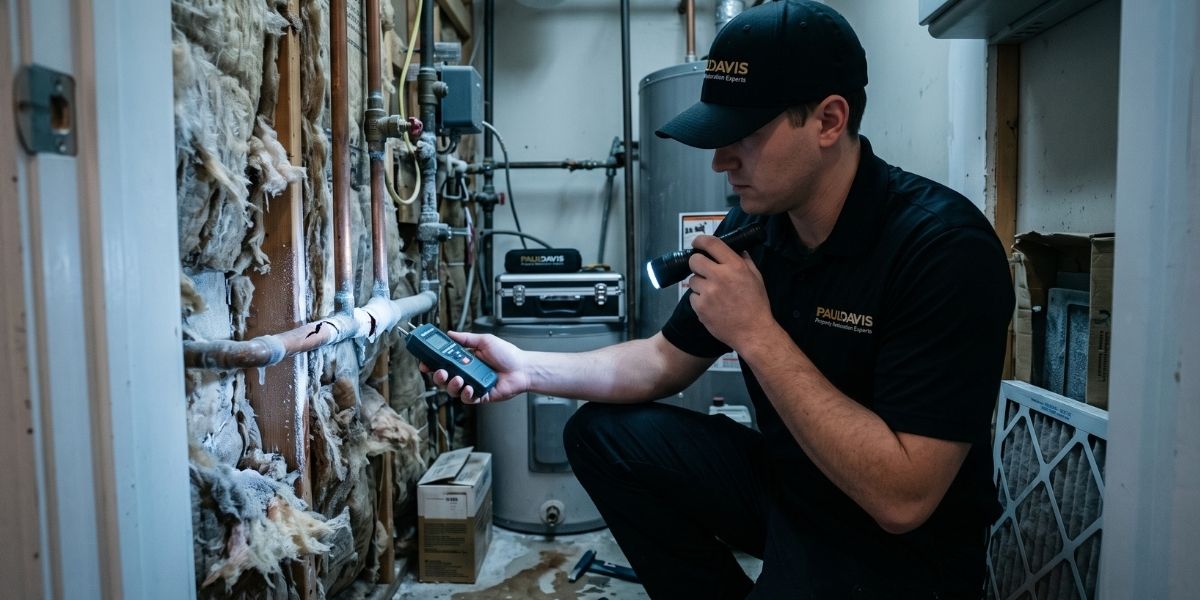
Professional fire damage restoration begins by identifying every area affected by both fire and water. Moisture meters, thermal imaging cameras, and detailed inspections help locate water hidden behind walls and beneath flooring before rebuilding starts.
Hidden moisture can delay rebuilding and create bigger problems
A home may appear dry on the surface while moisture remains trapped inside structural materials.
If rebuilding begins too soon, trapped moisture can lead to:
- Mold growth behind drywall
- Wood framing that warps or twists
- Flooring adhesives that fail
- Soft or deteriorating subfloors
- Persistent odors that never completely disappear
These problems often require contractors to remove newly installed materials so drying can begin again.
Proper fire damage cleanup includes controlled drying before reconstruction, reducing the likelihood of expensive repeat repairs.
Professional drying protects your home’s structure
Drying a fire-damaged home involves much more than placing a few fans inside the building.
Restoration professionals create a drying plan based on moisture readings and building materials. Industrial air movers, commercial dehumidifiers, and specialized drying equipment work together to remove moisture from structural components.
As part of comprehensive fire damage restoration, technicians continually monitor moisture levels to confirm that framing, drywall, and flooring have reached acceptable drying standards before reconstruction begins.
For homeowners in western Montana, this is particularly important because seasonal temperature swings can slow drying inside enclosed wall cavities and crawl spaces.
Insurance companies expect proper documentation
Insurance providers generally require documentation showing that appropriate mitigation occurred before repairs begin.
This includes:
- Moisture readings
- Drying logs
- Equipment monitoring reports
- Photographs documenting conditions
- Detailed mitigation records
Choosing experienced professionals for fire damage restoration helps simplify communication with your insurance company.
Paul Davis Restoration of Greater Missoula works directly with many major national insurance providers using standardized Xactimate pricing, making the claims process smoother while maintaining transparent, fair pricing without inflated estimates.
One contractor can simplify the entire recovery process
Many homeowners mistakenly believe they need separate companies for emergency cleanup, drying, demolition, and reconstruction.
Working with one restoration company often reduces delays because every phase is coordinated from start to finish.
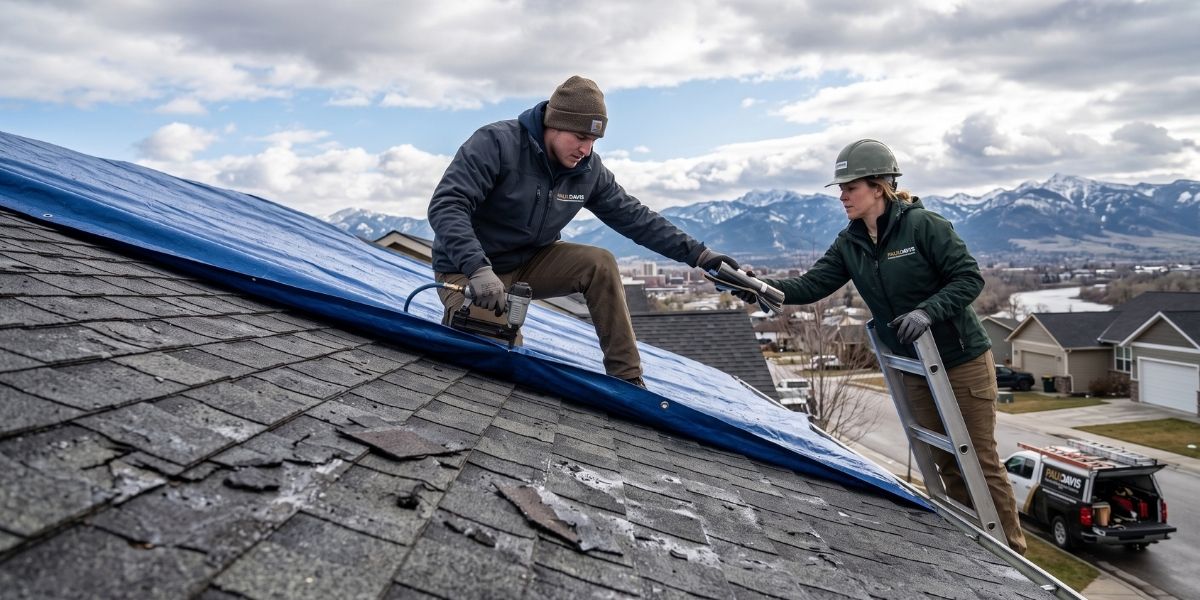
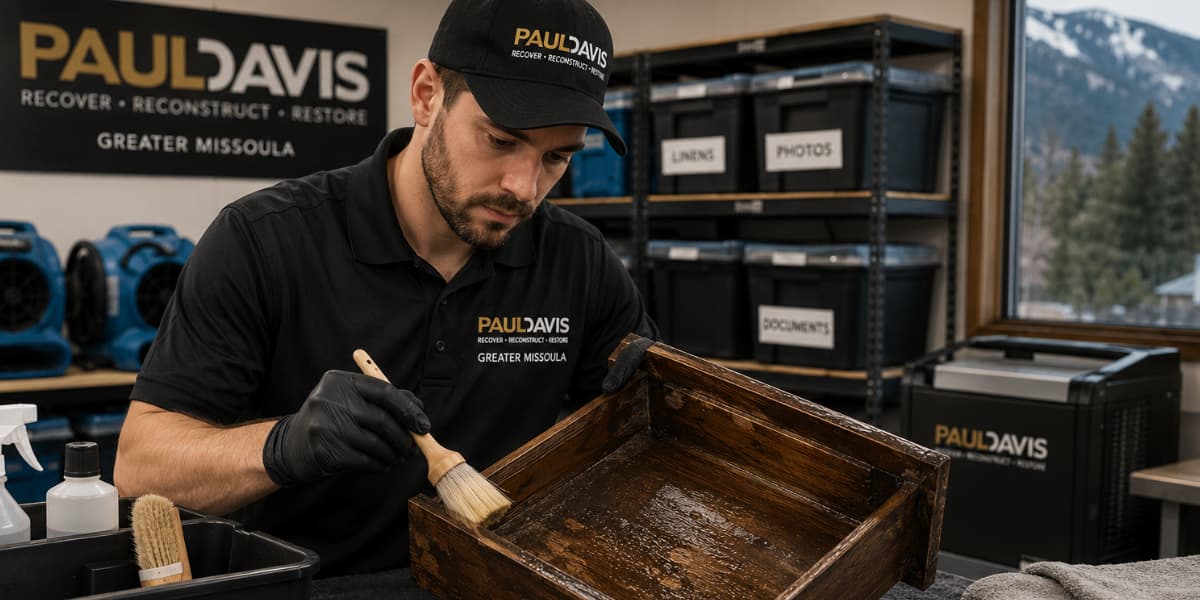
Homeowners can rely on Paul Davis for complete residential restoration services, including emergency mitigation, structural drying, smoke cleanup, and fire damage repair before moving into full residential restoration and complete reconstruction when the home is ready.
Their in-house rebuild team also helps avoid scheduling delays that often occur when multiple contractors are involved.
Local experience matters after a Montana house fire
Fire recovery isn’t identical everywhere.
In Missoula, homes near forested neighborhoods may experience wildfire-related fire losses, while older homes throughout established residential areas often face electrical or heating-related fires during colder months. Rural properties around Alberton and Arlee can also experience delayed drying because larger structures and detached buildings may retain moisture longer after suppression efforts.
This local experience helps restoration professionals prioritize drying strategies based on Montana’s climate and construction styles.
Paul Davis proudly provides fire damage restoration throughout Missoula, while also serving homeowners in nearby Alberton and Arlee with rapid emergency response.
Their locally owned team is backed by IICRC-certified professionals, offers 24/7 emergency service, responds within approximately one hour whenever possible, and focuses on arriving with a clear restoration plan instead of a sales pitch.
Don’t rush rebuilding before the drying process is complete
After a fire, it’s understandable to want life to return to normal as quickly as possible.
However, rebuilding before drying is complete can create long-term structural issues that cost significantly more than taking the proper mitigation steps first.
Professional fire damage restoration ensures the property is stabilized, thoroughly dried, documented for insurance, and prepared for reconstruction the right way.
That careful process protects both your home’s value and your family’s safety long after repairs are finished.
Frequently Asked Questions
How long does drying take after a house fire?
Every property is different, but structural drying typically takes several days depending on the amount of water, building materials, and weather conditions. Moisture testing determines when rebuilding can safely begin.
Can mold grow after firefighters extinguish a fire?
Yes. Mold can begin developing within 24 to 48 hours if moisture remains trapped inside walls, flooring, or insulation. Prompt mitigation greatly reduces this risk.
Will homeowners insurance pay for drying after a fire?
Many homeowner insurance policies cover necessary emergency mitigation, including drying, when the damage results from a covered fire. Your policy and adjuster will determine specific coverage.
Should I search for fire damage restoration near me immediately after a fire?
Yes. Rapid response helps minimize additional water damage, reduces the risk of mold, and protects salvageable building materials before conditions worsen.
Why can’t reconstruction start immediately?
Contractors must verify that structural materials have dried to acceptable moisture levels. Beginning repairs too early can trap moisture behind finished surfaces and create future structural problems.
Restore Your Home the Right Way
Recovering after a fire involves much more than replacing damaged materials. Proper drying lays the foundation for a successful rebuild and helps prevent expensive problems later. Paul Davis Restoration of Greater Missoula provides emergency response, professional mitigation, insurance coordination, and complete reconstruction from one trusted local team. Whether your home has experienced extensive fire damage or requires comprehensive fire damage restoration, you can count on experienced professionals who restore more than property—they restore peace of mind.