Wildfire smoke does not need a fire at your address to cause damage. When smoke settles over western Montana for days or weeks, fine particles and odor can work their way into homes, and contents cleaning can help restore the belongings they reach.
How Wildfire Smoke Gets Indoors
Smoke enters through open windows, gaps around doors, attic vents, and the heating and cooling system. Once inside, it settles on surfaces and soaks into soft materials. A household in Missoula may notice a hazy film on shelves or a smoky smell in bedding even though no flames ever came near the property. The longer the smoke hangs around, the more it can build up.
Which Belongings Hold Smoke Longest
Porous items absorb the most. Bedding, clothing, upholstered furniture, mattresses, stuffed toys, books, and paper tend to hold odor, while glass, metal, and sealed wood usually collect surface residue that can be wiped away. Closets and drawers left open during a smoky stretch are more likely to be affected than ones that stayed shut.
What Contents Cleaning Can Do
Contents cleaning removes the residue that carries the smell. Teams may use HEPA vacuuming, dry and wet wiping, laundering, and deodorizing treatments, depending on the material. An air purifier helps with the air in a room but does not clean particles already on surfaces and fabrics. For more serious exposure, contents cleaning can be the step that brings belongings back to normal. A team can usually tell after an inspection which belongings are good candidates for contents cleaning and which are not.
Quick Steps to Limit Smoke Inside
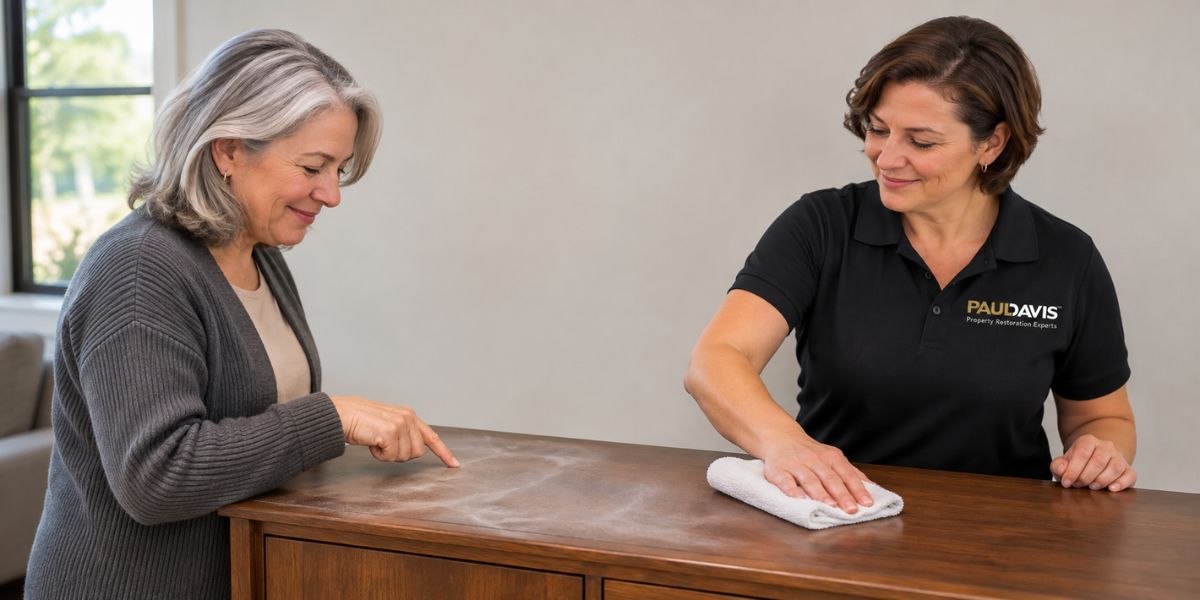
When the air outside is smoky, keep windows and doors closed and run the heating or cooling system with a clean filter, set to recirculate if possible. Replace filters more often during a long smoke event. Avoid sweeping or dry dusting, which can send fine particles back into the air. A damp cloth is a gentler way to wipe surfaces.
Protecting Belongings Before the Next Smoke Season
Smoke events tend to return, so a little preparation helps. Store seasonal clothing and bedding in sealed containers before smoke arrives, and keep a stock of clean filters for the heating and cooling system. Clearing a closet of items you rarely use means fewer exposed belongings and less contents cleaning later. Photographs of your home in its normal condition also make it easier to show what changed if a claim becomes necessary.
Cleaning Hard Surfaces and Keepsakes
Wipe hard surfaces with a damp microfiber cloth, working gently so the film is lifted instead of rubbed in. Handle photos, paper, and fragile keepsakes with clean, dry hands, and ask a professional before cleaning anything valuable. People with asthma or other breathing problems should limit their exposure to cleaning dust. For heavier smoke and fire losses, see the fire damage restoration page.
When Smoke Exposure Calls for Professional Contents Cleaning
Consider help when the odor lingers after cleaning, when many rooms are affected, or when valuable or sentimental items are involved. Heavy or repeated smoke exposure can leave residue in places that are hard to reach. Households in Frenchtown who are unsure how far the smoke traveled can ask a restoration team to check closets, attics, and stored items.
Insurance and Documentation for Smoke Claims
Coverage for smoke from a distant wildfire varies by policy, so ask your insurer what it requires. Photograph visible residue, list the belongings affected, and keep receipts for cleaning supplies and professional services. Because the damage can build over several days, notes with dates are useful, and families in Florence can check the residential restoration page to see which services may apply. Note which rooms were closed and which were open, since that detail can help show how far smoke traveled.
How Paul Davis of Greater Missoula Can Help
Paul Davis of Greater Missoula is an IICRC certified company with 24/7 emergency service and a free estimate. The company says it is on site within 60 minutes, 24/7, and that it works directly with insurance providers. To ask about smoke-damaged belongings, use the contact page.
Frequently Asked Questions
Can wildfire smoke damage belongings if the fire is miles away?
Yes, it can. Smoke travels long distances, and fine particles and odor can settle on fabric and other surfaces indoors.
Will an air purifier remove smoke odor from my belongings?
An air purifier cleans the air, but it does not remove residue that is already on surfaces and fabrics.
Which belongings are hardest to clean after smoke exposure?
Porous items such as mattresses, pillows, upholstered furniture, books, and stuffed toys are typically harder to clean than hard surfaces.
Does Paul Davis of Greater Missoula offer contents cleaning?
Yes. Paul Davis of Greater Missoula offers contents cleaning, and it says its team is on site within 60 minutes, 24/7.
How can I tell if smoke has reached my belongings?
Look for a hazy film on surfaces, a lingering smoky smell, or discoloration on light fabrics. Comparing a closed closet with an open room can also help.
When smoke from far away leaves its mark, Paul Davis of Greater Missoula can help you decide what to clean.
Follow Paul Davis of Greater Missoula: Facebook | Instagram | YouTube